


TAPping Into the Adjacent Possible: Research Workshop Draws International Scholars
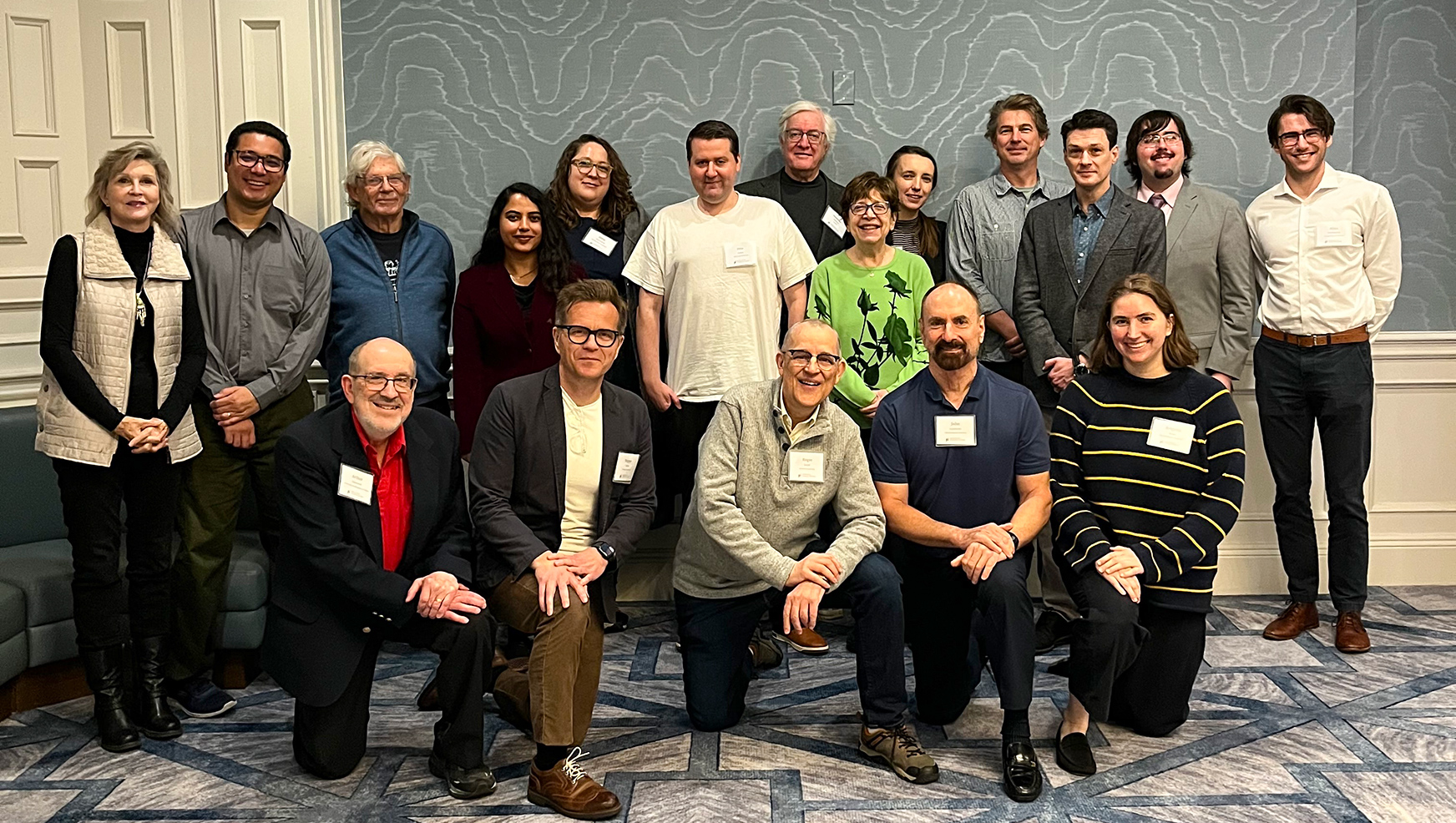
The Institute for an Entrepreneurial Society (IES) at Syracuse University co-hosted a workshop with the Institute for Humane Studies (IHS) on technological change and related work currently being developed by IES scholars. The workshop, held at the Ritz-Carlton Hotel in Arlington, Va., from November 7-9, 2025, was funded by the Kauffman Foundation, with further financial backing from the IHS.
Participants included leading complexity scientists such as MacArthur “genius” Stuart Kauffman, and “edge of chaos” Norman Packard, who famously co-led a team of students who beat Las Vegas at roulette using home-made computers hidden in their shoes. Other participants included economics, management, and philosophy scholars from, among others, Syracuse University, New York University, the University of Utah, George Mason University and Maastricht University, as well as Ph.D. students interested in entrepreneurship, complexity theory and technological change.
The workshop focused on the new Theory of the Adjacent Possible (TAP) model which IES Associate Director Roger Koppl has developed with Stuart Kauffman and others. The TAP model explains technological change as an evolutionary process, where new elements are created by recombining existing elements to produce advances in technology. Overall, the papers showed that the TAP model is rich in both implications and applications. Among various topics, workshop participants presented papers that applied TAP theory to the U.S. healthcare market, the emergence of organization, and the dynamics of technological change under restrictive regulation.
The workshop produced a set of papers that will be published in leading academic journals. More importantly, it forged new ties among TAP researchers who discovered how the TAP model has created deep connections across disciplines and helped lay the foundations for further work on technological innovation with important applications in business management and public policy. Persons interested in this important stream of IES research should contact Professor Koppl at rkoppl@syr.edu