


Five Facts That Make an Impact: Seth Goldberg Leads Raymour & Flanigan into Its Next Chapter
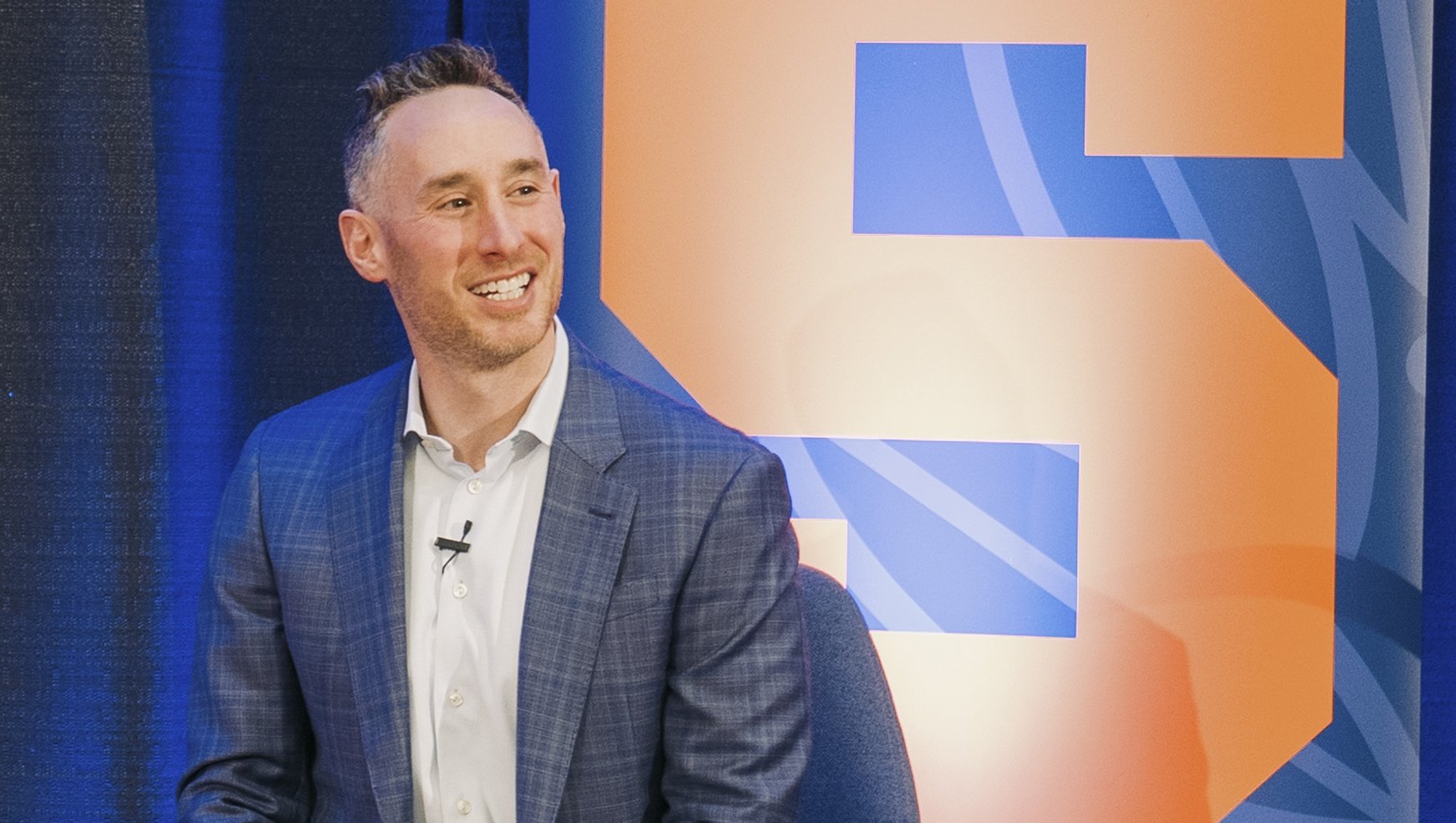
As president of Raymour & Flanigan Furniture, Seth Goldberg leads the largest home furnishings retailer in the northeastern United States—an 80-year-old, family-founded company with 150 stores and a growing footprint. A third-generation leader, Goldberg earned his undergraduate degree from Yale University, and a law degree from the University of Pennsylvania. He joined the Syracuse-based family business in 2008 and spent more than a decade gaining a deep understanding of the business through leadership roles across sales, operations, marketing, digital, e-commerce, IT and customer care. He was named president in early 2021, guiding the company through a period of rapid change while honoring the values that have defined it for decades.
At Syracuse University’s Impact Series Lecture, Goldberg reflected on the lessons that have shaped his leadership.
Leadership credibility is earned on the front lines.
Growing up, we were exposed to our family business at a really young age—going into stores, warehouses and the Field Support Center with our father and grandfather. But when I officially joined the business after law school, my first role was as an operations manager at a newly opened delivery facility in Queens, New York. This first official role was a real eye-opening experience. When building and leading a team there are many lessons you simply cannot learn in a classroom.
Having leadership experiences across many company departments has been invaluable. If you don’t understand what your associates go through every day or what customers experience, you will not be well prepared to lead an organization at a high level.
There is no single “right” leadership style.
I am very fortunate to work alongside my father (Neil Goldberg ’75), who is still active as chairman and CEO. He’s my role model and mentor, but we have different styles and strengths. One of the biggest lessons I’ve learned is that there is no single leadership style that guarantees success.
It is important to find a balance between leading with humility and confidence. You must recognize what you don’t know and be willing to learn, but you also need the courage of your convictions.
I also think it is important to rethink the idea of a “dream job.” Some of the experiences that shaped me the most were the ones I may not have loved in the moment. But all of those experiences teach you something. They help you grow.
Progress often requires disruption—and discomfort.
A few years ago, I heard a quote that really captures the balance we’re trying to strike: “you have to lead with the wisdom to know what to honor and preserve from the past, and the courage to boldly reinvent the future.”
One of the clearest examples of this in our business is the evolution we have made with technology. We were running parts of our business on systems that were decades old. They worked—but we had built layer upon layer around them.
Replacing our 45-year-old enterprise resource planning system was one of the biggest and hardest decisions we have made. It was disruptive. It was expensive. It took longer than we expected. And when you interrupt a business that’s been stable for so long, you take a few steps back before you can move forward.
But technology for technology’s sake is not the goal. New technology must solve real business problems and make life better for our associates and our customers.
Building the right team matters more than anything else.
We talk about our business like a team sport because everything starts and ends with people. One thing we look for is a competitive drive—a desire to win. Being a culture fit matters more than anything. If you do not align with our values—be one team, raise the bar, be credible and honest—it really does not matter what your resume looks like. That’s why we try to spend meaningful time with candidates who are interested in joining the company. We want them to shadow us, sit in on meetings, spend half a day with the team – formal interviews can only tell you so much.
And when things don’t go well, we try to coach people up before we ever coach them out. If someone ultimately needs to leave the organization, it shouldn’t be a surprise. Transparency and communication are critical.
Adaptability—not certainty—is the real competitive advantage.
Delivery in three days or less has been a core part of our model for years, but expectations have changed. Amazon has changed how consumers think about speed to fulfillment, and those expectations carry over—even for big, discretionary purchases like furniture and mattresses.
Success for us is not about avoiding challenges—it is about having the right people and systems in place to respond to them. COVID made that very clear. No one was prepared for that level of volatility but having a strong team allows a company to successfully navigate any amount of adversity.
For students thinking about their future, I would say this: you don’t need to have it all figured out. Put yourself in different situations and learn from every experience. Be true to who you are. You’ll find your path.