


Five Takeaways: Tim Schlittner on Navigating Careers, Crisis, and Communications in a Creator World
Tim Schlittner knows what it means to bet on yourself. A Syracuse University alumnus who spent nearly two decades building a career in politics and organized labor, Schlittner took a leap of faith in 2021, writing down a “dream jobs” list on a Post-it note. Soon after, he landed a role doing communications for America’s most-watched professional sport.
As director of communications for the National Football League, he contributes to messaging on a wide range of issues: from the Super Bowl halftime show to crisis response to the emerging world of athlete-creators.
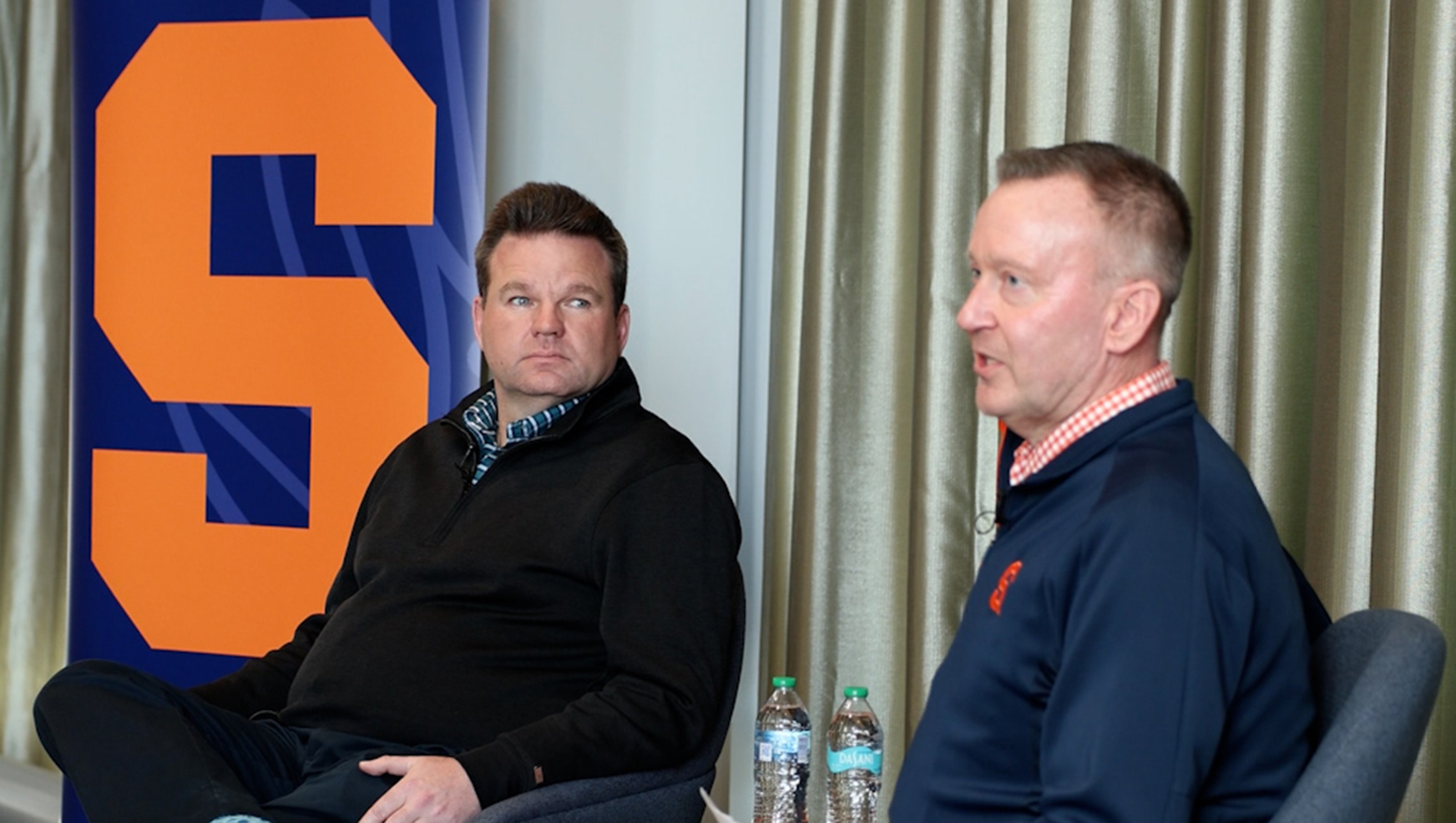
Schlittner visited the Whitman School of Management for a fireside chat with Vice Chancellor Mike Haynie, presented by the Center for the Creator Economy. Speaking to a student audience, he reflected on his journey - from answering phones on Capitol Hill to shaping communications on the Super Bowl stage - and shared candid advice on building a meaningful career.
Here are five takeaways from the conversation:
---
Your network is only as strong as you make it, and it never stops growing.
I leaned on a network I had built over 19 years to get my resume out of the pile. I don't think I would have made it through the automated screening otherwise, because I didn't have any sports experience on my resume. That network got me to the first conversation, and once I was in front of someone at the NFL, I could show them I was a good fit.
I still network relentlessly. I use LinkedIn. I'm not hesitant to send a cold message to someone working on a project I'm interested in, or who was quoted in an article I found compelling. I love a quick coffee meeting. If my network is static, then I become stagnant. I also want to meet people outside my industry and people who don't think the same way I do. That's what keeps your thinking sharp and your world expanding.
Find where your passion and your talent actually intersect.
I would have loved to be a wide receiver. I'm passionate about football. But that's not what I'm good at. Communications is where I can contribute to the game. That intersection, what you love and what you're genuinely skilled at, is where you want to build your career.
This isn't always obvious right away, and that's okay. Use your time in college to build your skills and discover your passions. Come out of here better than you arrived. The goal isn't just to find a job you love. It's to find work where you can actually make an impact.
In communications, the discipline is in knowing when to speak and when to say nothing.
The NFL says something, it gets enormous attention. The NFL doesn't say something, it also gets attention. That level of scrutiny demands strategic thinking at every turn. A big part of our job is doing what I call a situational awareness assessment: reading the temperature online, in the press, among our fans. We then make our best judgment on the right response. Is this a moment to push back? To educate? To stay quiet and let the story pass? More often than not, the answer is to do nothing. But when you need to act, you need to act decisively.
Before the Super Bowl, our department leader reminded the whole team that we've planned all season. Now the only thing left is to execute. That's the job.
In a crisis, talk to yourselves before you talk to the world.
On January 2, 2023, I was at home watching Monday Night Football when Damar Hamlin collapsed on the field in cardiac arrest. It was the NFL's worst fear in real time. A player whose life was in danger, and we were all remote, scattered, watching it on television like everyone else. The first thing we had to do was talk to each other: understand what was happening, agree on what we knew and what we didn't, and determine what we were going to say. Not the other way around.
That midnight press conference call had over 100 people on the line. We had to correct a false report that was gaining traction - that the NFL had asked players to warm up and get back on the field within minutes. Getting out in front of that error and redirecting the story back toward Damar's care and recovery, was critically important. By Wednesday, we heard Damar had woken up and asked, "Did we win?" That was the first time I cried all week.
Be your authentic self in every room you walk into.
If I could go back and give my college self one piece of advice, it would be this: don't put on a mask. Don't try to be something for someone else. Surround yourself with people who lift you up and challenge you, not people who just agree with everything you say.
I spent years not being fully myself, and it cost me energy and peace that I could have been putting into my work and my relationships. The moment I started showing up as exactly who I am - in every meeting, every conversation, every room - was the moment I became the most effective version of myself professionally. Authenticity isn't a soft skill. It's a competitive advantage.
---
Schlittner closed the conversation by encouraging students to tap into the Syracuse alumni network which he described as unparalleled, especially in the sports world. "I would not have gotten this job without Syracuse," he said. "The connections, the mentorship, the training… I left here so much better than I arrived."