

Graduate Student Brings Entrepreneurship Education to Young Girls in Syracuse Community
When Sidney Mejia ’25 (MAX), ’26 M.S. began teaching entrepreneurship to girls ages 8 to 13 at La Casita Cultural Center, she encountered skepticism. Could children really grasp graduate-level business concepts? Would these methods resonate with elementary and middle schoolers?
The answer, Mejia discovered, was a resounding yes.
The “Why Not Me?” program introduces participants to the high-stakes world of entrepreneurship through hands-on experience rather than passive learning. Using the Lean Startup Method, a framework typically taught at the graduate level, students don't simply ‘play business.’ They build real ones.
“One takeaway is that you never know what a child is capable of until you give them the opportunity to try,” says Mejia, a master of science candidate in Entrepreneurship and Emerging Enterprises (EEE) at Whitman. “When I first told peers about ‘Why Not Me?’ they were skeptical about the girls being able to grasp graduate-level terms like ‘The Lean Startup Method.’ I am proud to say that the girls not only exceeded these expectations, they were able to accurately describe the Lean Startup Method to other participants throughout the exhibition.”
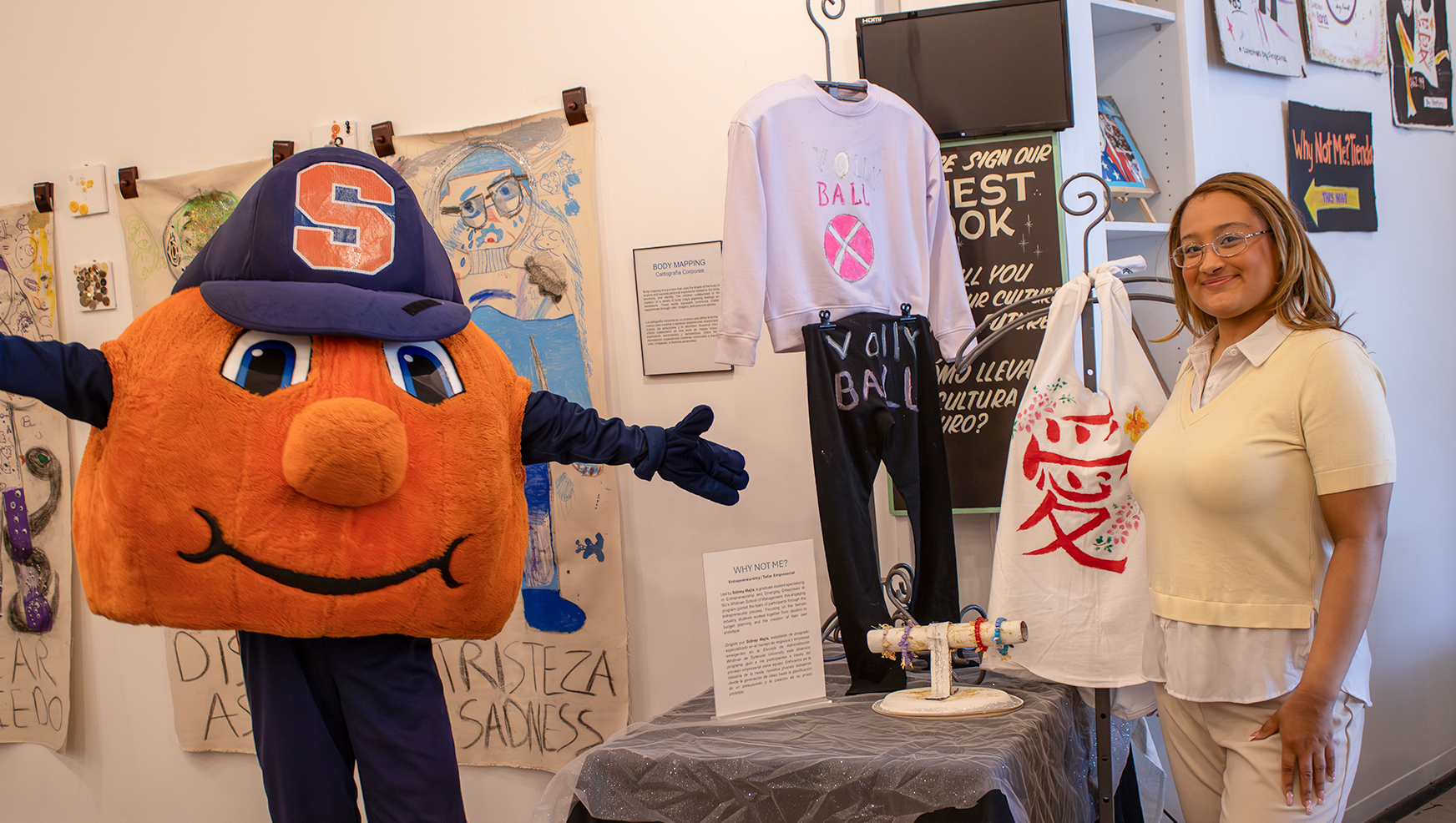
That exhibition, held at La Casita's Young Art Exhibition, showcased the culmination of weeks of work. Students displayed their original products alongside posters detailing their business strategies, demonstrating mastery of concepts that many college students struggle to understand.
“These young entrepreneurs learn to test assumptions, conduct market research, pivot their strategies and develop complete business plans for products of their own creation,” explains Professor John Torrens, who supervised Mejia's independent study. “Sidney created something truly special, a program that respects children's intelligence and creativity while giving them tools they'll use for the rest of their lives.”
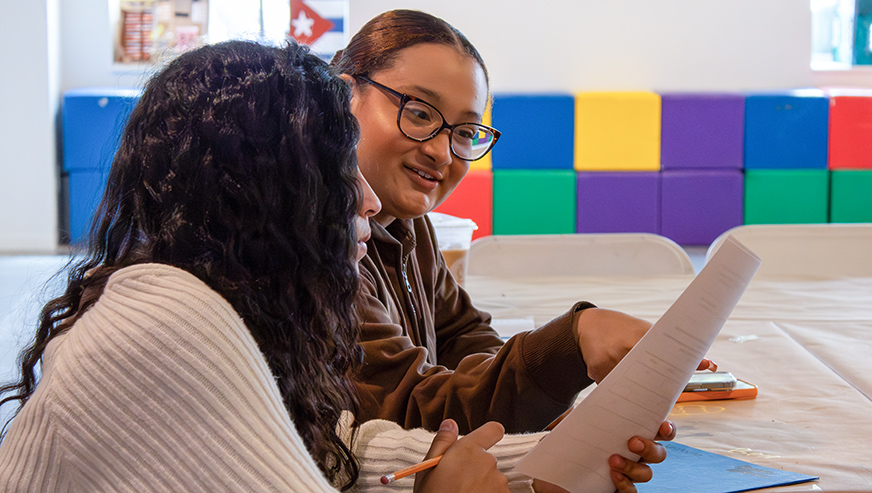
Sidney Mejia helping a student.
The program's approach challenges traditional assumptions about age-appropriate business education. Rather than simplifying concepts, Mejia maintained academic rigor while making the material accessible through practical application. Students learned to identify customer needs, validate their ideas through research and iterate based on feedback. These are the same processes used by successful entrepreneurs worldwide.
For Mejia, the program represents more than an academic exercise. It's a bridge between Whitman's classroom and the Syracuse community, demonstrating how business education can create opportunity and inspire the next generation of innovators.
“What struck me most was watching these girls realize they could be entrepreneurs,” Mejia says. “They saw that business isn't something that happens to other people, in other places. It's something they can create right now, with their own ideas and their own hands.”
The success of “Why Not Me?” highlights the importance of experiential learning opportunities that extend beyond campus. By taking graduate-level knowledge and making it accessible to young community members, Mejia exemplifies Whitman's commitment to both academic excellence and social impact.
As the Young Art Exhibition demonstrated, when given the opportunity and the tools, young people can exceed even the most optimistic expectations. Sometimes, the most important question isn't whether children can learn advanced concepts—it's whether adults are ready to let them try.
For Mejia and her students at La Casita, the answer was clear from the start: Why not?