

Undergraduate Majors
The Whitman School offers nine undergraduate business majors.
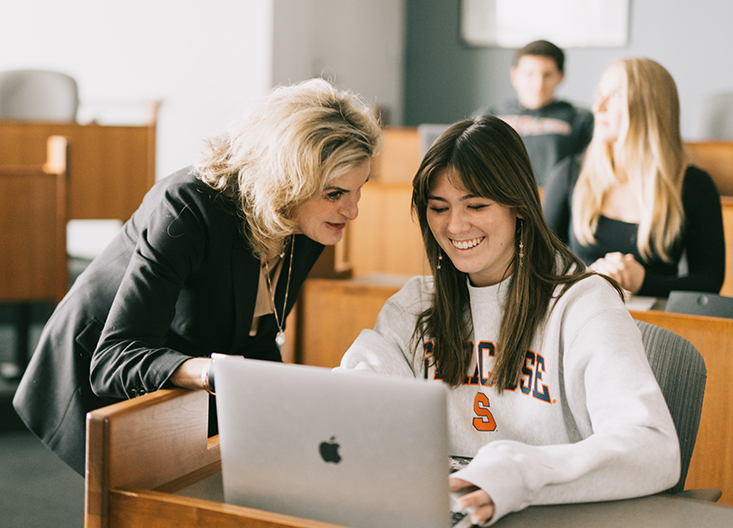
Each student in the Whitman School is required to complete one major field of study. You will have two years to explore your options and select the major (or multiple majors) that best fits your interests.
Whitman students have the opportunity to take two complementary business majors, while adding minimal credits to their program.
Undergraduate Programs





Dual Programs
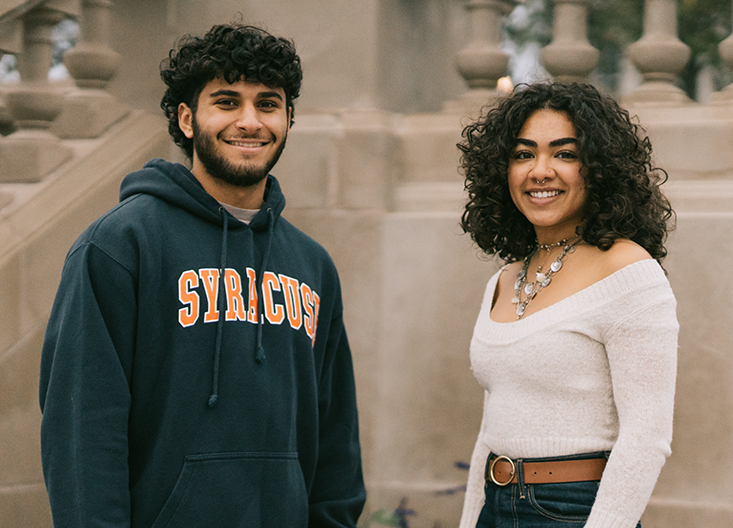
The Whitman School offers the chance to earn a dual major, which allows students to pursue two programs of study in different schools at the University at the same time.
- School of Information Studies
- College of Arts and Sciences/Maxwell School of Citizenship and Public Affairs
- S.I. Newhouse School of Public Communications
- College of Law
Experiential Learning
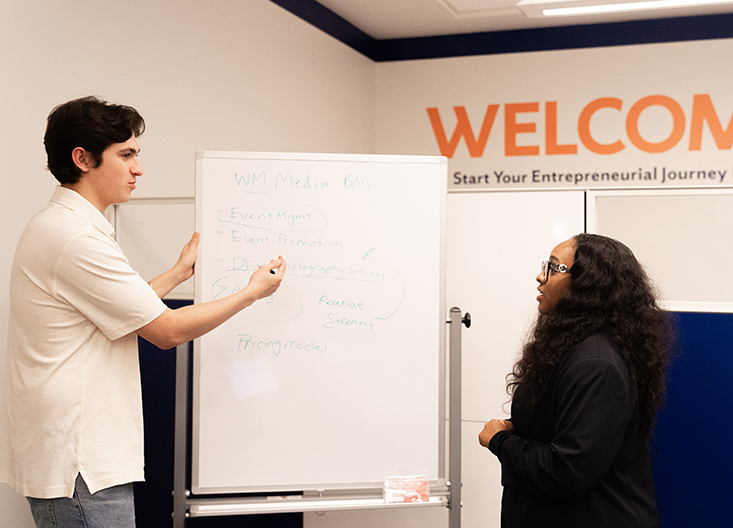
The Whitman School creates and facilitates experiential programming that bridges the gap between classroom learning and practical application — all while expanding job placement opportunities and helping students build meaningful connections.
Clubs and Connections
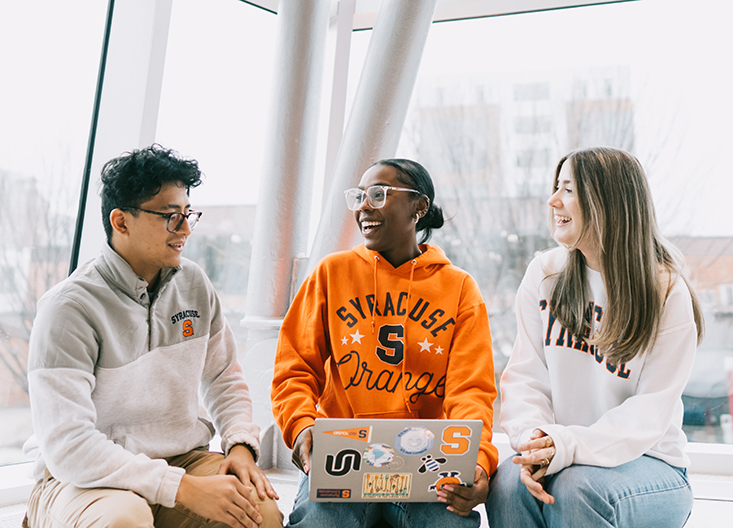
You can meet and network with students and professionals who share your business and entrepreneurial interest by participating in our approximately 17 student clubs and organizations.
Student Profiles
Finding His Rhythm: Heath Megnin Transforms His Passion for Music Into Data-driven Insights in the Record Industry
Heath Megnin ’26 (WSM/NEW)
Business Analytics, Finance and Television, Radio, and Film
Both schools do such a good job of getting professors of practice who’ve actually done the job before. They really provide a perspective that you don’t get unless you’ve done the job.
As a senior pursuing dual degrees in finance and business analytics at the Whitman School and television, radio and film at the S.I. Newhouse School of Public Communications, Heath Megnin ’26 (WSM/NEW) has discovered his niche at the intersection of music, data and storytelling
“Music is 100% my passion,” Megnin says from his summer internship in New York City, where he was working at Columbia Records, the oldest record label in the industry.
At Columbia, Megnin was part of a team modernizing radio promotion for the digital age. While streaming services dominate music consumption, radio still reaches over 100 million people weekly, many of whom don’t use platforms like Apple Music or Spotify. “A lot of what I do is data analytics for the executives to go out and pitch songs to radio stations so that we can get as many spins on our records as possible,” he says.
Megnin’s role involves sophisticated data analytics, tracking song performance through databases like Mediabase to project chart positions and optimizing radio play. But he’s also working on something more ambitious: implementing artificial intelligence (AI) systems to automate routine tasks so executives can focus on what matters most—the music itself.
“The music industry has changed so much, even over just the past year,” he says. “With so many recent layoffs, I’m working to create systems that free up time and increase efficiency.”
The previous summer, Megnin worked at Republic Records, part of the Universal Music Group, which represents top artists such as Taylor Swift, Post Malone and Sabrina Carpenter. “Republic has been the most prominent label over the last ten years, and Columbia is the oldest label in the industry, so I really am fortunate to experience working at both,” he says.
He credits the combination of his Whitman and Newhouse education for being crucial to his success. “Both schools do such a good job of getting professors of practice who’ve actually done the job before,” says Megnin. “They really provide a perspective that you don’t get unless you’ve done the job.”
A Denver native, Megnin comes from a family with strong Syracuse University ties. His parents met as Syracuse undergraduates, and both grandfathers attended the University. Beyond academics, he’s an active member of Delta Sigma Pi business fraternity, serves as a Whitman School ambassador, co-directs the collaborations board for the University Union and serves as finance commodore for the Syracuse club sailing team.
Looking ahead to graduation, Megnin hopes to land in New York, Nashville or Los Angeles, the music industry’s major hubs. “I’m passionate about exploring how art, music and culture can shape and inspire communities,” he says.
By Renee Gearhart Levy