

Undergraduate Majors
The Whitman School offers nine undergraduate business majors.
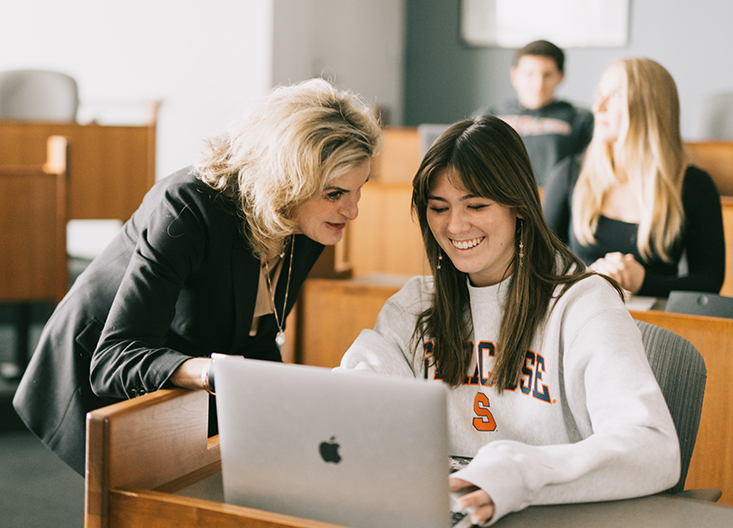
Each student in the Whitman School is required to complete one major field of study. You will have two years to explore your options and select the major (or multiple majors) that best fits your interests.
Whitman students have the opportunity to take two complementary business majors, while adding minimal credits to their program.
Undergraduate Programs



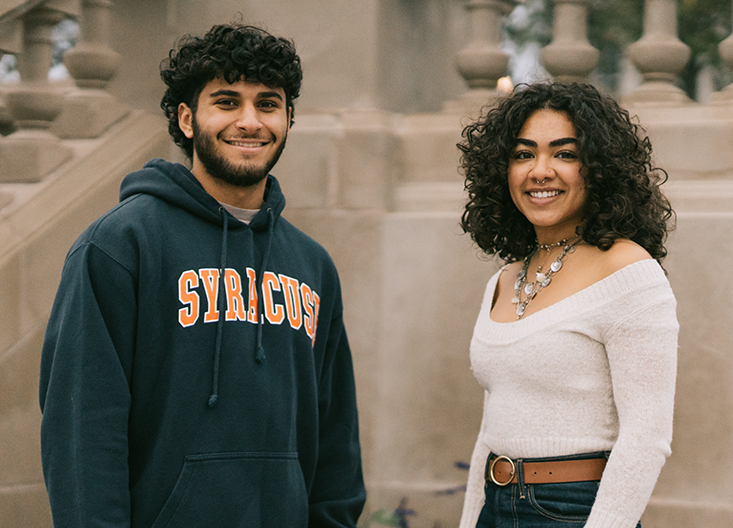

Dual Programs
The Whitman School offers the chance to earn a dual major, which allows students to pursue two programs of study in different schools at the University at the same time.
- School of Information Studies
- College of Arts and Sciences/Maxwell School of Citizenship and Public Affairs
- S.I. Newhouse School of Public Communications
- College of Law
Experiential Learning
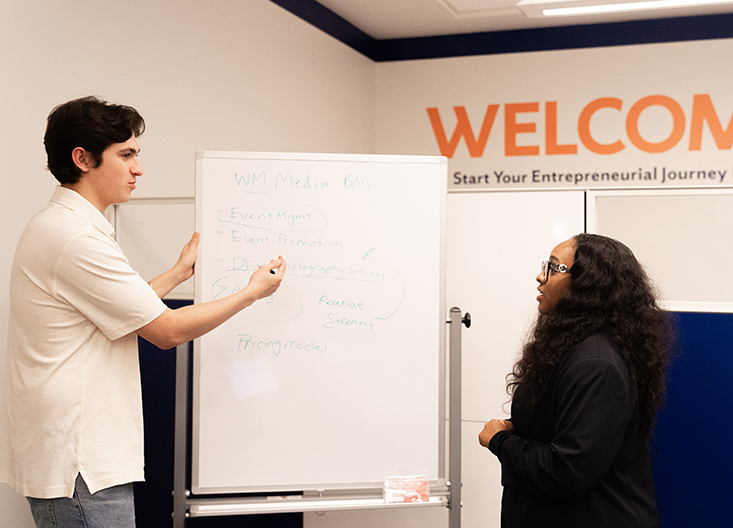
The Whitman School creates and facilitates experiential programming that bridges the gap between classroom learning and practical application — all while expanding job placement opportunities and helping students build meaningful connections.
Clubs and Connections
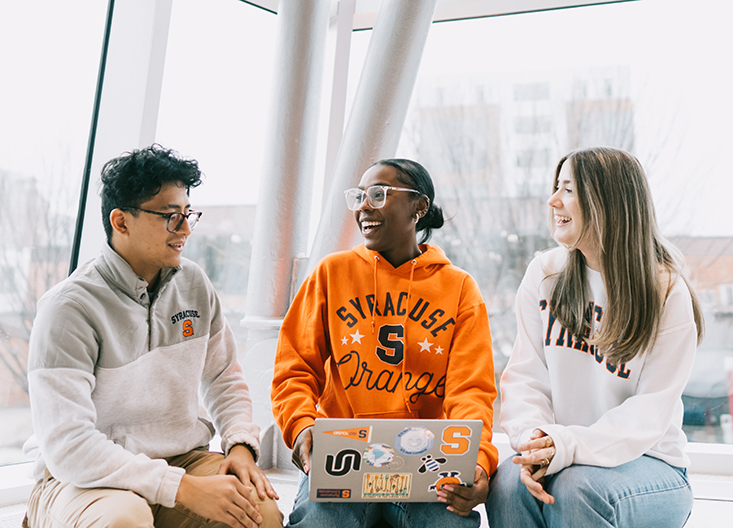
You can meet and network with students and professionals who share your business and entrepreneurial interest by participating in our approximately 17 student clubs and organizations.
Student Profiles
From Market Crash to Machine Learning: Ph.D. Student Jing Wen is Revolutionizing Financial Research with AI
Jing Wen ’28 Ph.D.
Finance
- Ph.D.
I want to be on a stage like other professors, teaching like they own the materials, to not only create knowledge, but to disseminate that knowledge.
The 2020 stock market crash that sent millions of investors into panic sparked something entirely different in Jing Wen: unquenchable curiosity. While others watched their portfolios plummet, the University of Toronto undergraduate found herself wondering why the markets were behaving the way they were.
“During COVID, the stock market was really dramatic,” recalls Wen, now a second-year finance Ph.D. student at the Whitman School. “As a student studying math and statistics, I really wanted to understand the factors behind what was happening.”
Those questions sent Wen on a path that has led her to the cutting edge of financial research, exploring how machine learning can transform everything from environmental, social and governance (ESG) investing to extracting market insights from news videos.
While earning a master’s degree in finance at Boston University, she realized she had discovered her passion. “Being exposed to research papers, I realized I had even more questions,” she says. “I’m very curious about the factors that drive stock returns, and I realized I could apply my math, stats and coding skillsets to finance using different data and models.”
The Whitman School’s finance program attracted her specifically because of its faculty expertise in asset pricing and machine learning—a perfect match for her quantitative background and growing interest in market behavior.
Wen’s doctoral research sits at the intersection of artificial intelligence and financial markets. Her primary project involves using machine learning methods to impute missing ESG values and analyze how these affect investment decisions.
But her most ambitious work involves extracting financial insights from video content.
“I’m trying to create data from news channels,” she says, describing her efforts to develop programs that can analyze BBC News and Wall Street Journal videos for market-relevant information. “Videos are unstructured data, so you can’t directly use them, but I’m trying to figure out how to transform and create data from videos.”
The complexity of this challenge doesn’t faze her. “I’m trying to write that code now,” she says. Having completed her coursework in May, Wen is preparing for her first teaching assignment this fall: FIN 346, an investment course for juniors and seniors.
She says it’s helpful that she’s comfortable interacting with all kinds of people, an outcome of her international background. Born in Beijing, Wen moved to Vancouver at age 4, spent her formative years in Canada, then returned to Beijing for high school at an international school serving diplomatic families.
“I can relate to anyone,” she says.
Aiming for a career in academia, Wen is excited to begin teaching. She credits her advisor, Professor Si Cheng, for playing a pivotal role in her academic journey, guiding her research and providing invaluable mentorship along the way.
“I want to be on a stage like other professors, teaching like they own the materials,” she says, “to not only create knowledge, but to disseminate that knowledge.”
By Renee Gearhart Levy